
Specific kit for the qualitative, rapid and specific detection of Salmonella spp. in food matrices.



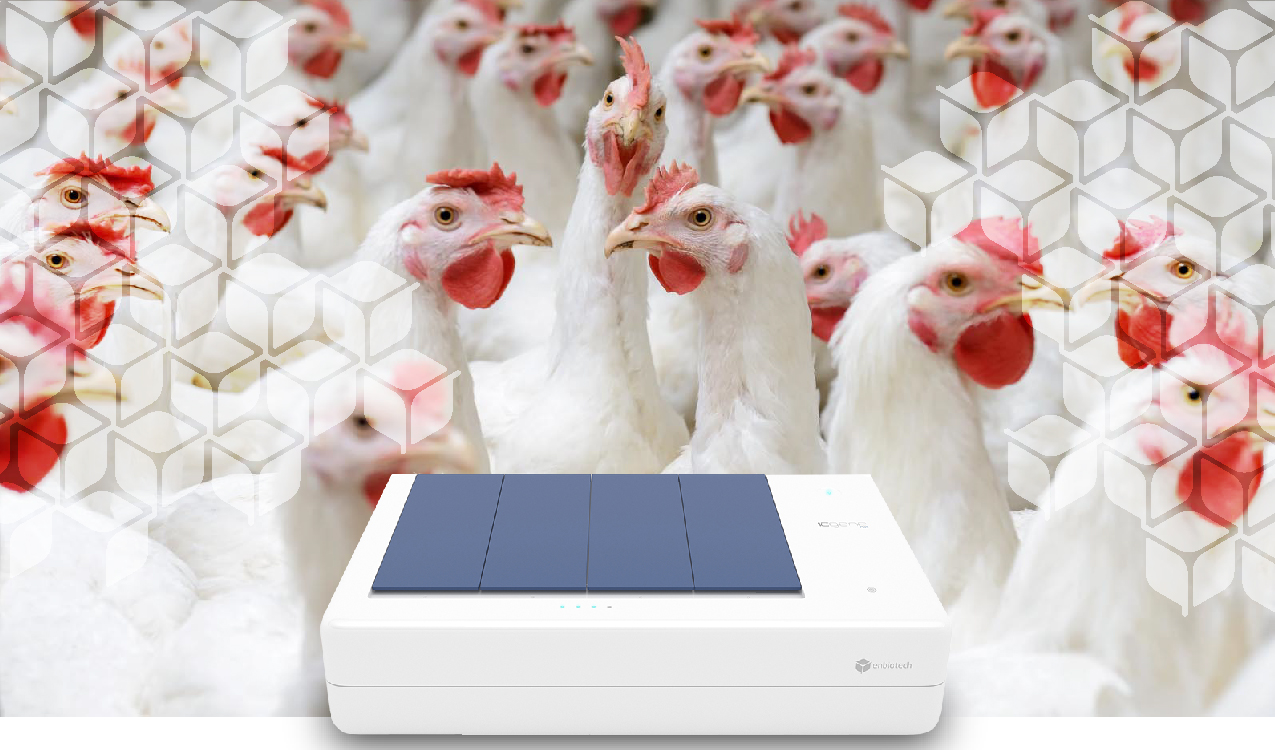
Campylobacter is a bacterium that can cause a disease in humans called campylobacteriosis.
With over 250,000 cases reported in humans each year, it is the most frequently reported foodborne disease in the European Union.
Campylobacteriosis is a zoonosis, that is, a disease or infection that can be transmitted directly or indirectly between animals and humans.
The main species responsible for disease in humans are Campylobacter jejuni, Campylobacter coli and Campylobacter lari.
Common symptoms include fever, diarrhea, and abdominal cramps. The main sources of infection are poultry, unpasteurized milk (and any cheese made from it), contaminated water (such as unchlorinated water from streams, rivers, and ponds), and processed foods. However, the bacterium can also be found in other types of meat, fish products, and vegetables.
Raw poultry meat is often contaminated with Campylobacter because the bacterium can live in the intestines of healthy birds. It is also found in pigs and cattle.
Three distinct test kits are available: one for the specific detection of Campylobacters spp, another for the determination of Campylobacter jejuni and the last for Campylobacter coli.
* Patent licenses WO 00/28082, WO 01/34790, WO 01/77317, WO 02/24902, WO 01/34838 ** Industrial invention patent no. 0001425753 dated 09.11.2016
To perform rapid DNA extraction and specific gene amplification with LAMP technology
Contains all information relating to the kit, including the lot number and expiration date
Con esito in tempo reale della ricerca di Campylobacter jejuni nei campioni di acqua analizzati
The system allows for automatic interpretation of results, real-time viewing, and online availability. Sigmoid curves corresponding to positive (+) samples indicate the presence of Campylobacter jejuni. Straight lines indicate that the analyzed samples are negative (o) for Campylobacter jejuni.
Specific kit for the qualitative, rapid and specific detection of Salmonella spp. in food matrices.
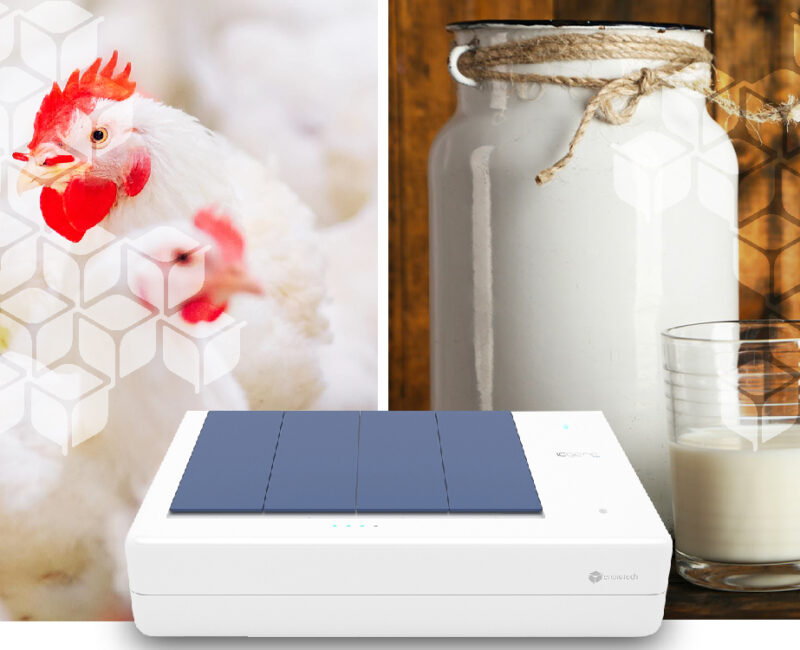
Specific kit for the qualitative, rapid and specific detection of Campylobacter spp. in food matrices.

Specific kit for the qualitative, rapid and specific detection of Anisakis spp. in food-grade fish products, fish, nematodes and larvae.
 English (UK)
  Italiano
  Polski